Choosing a Single Facer and Flute Profile

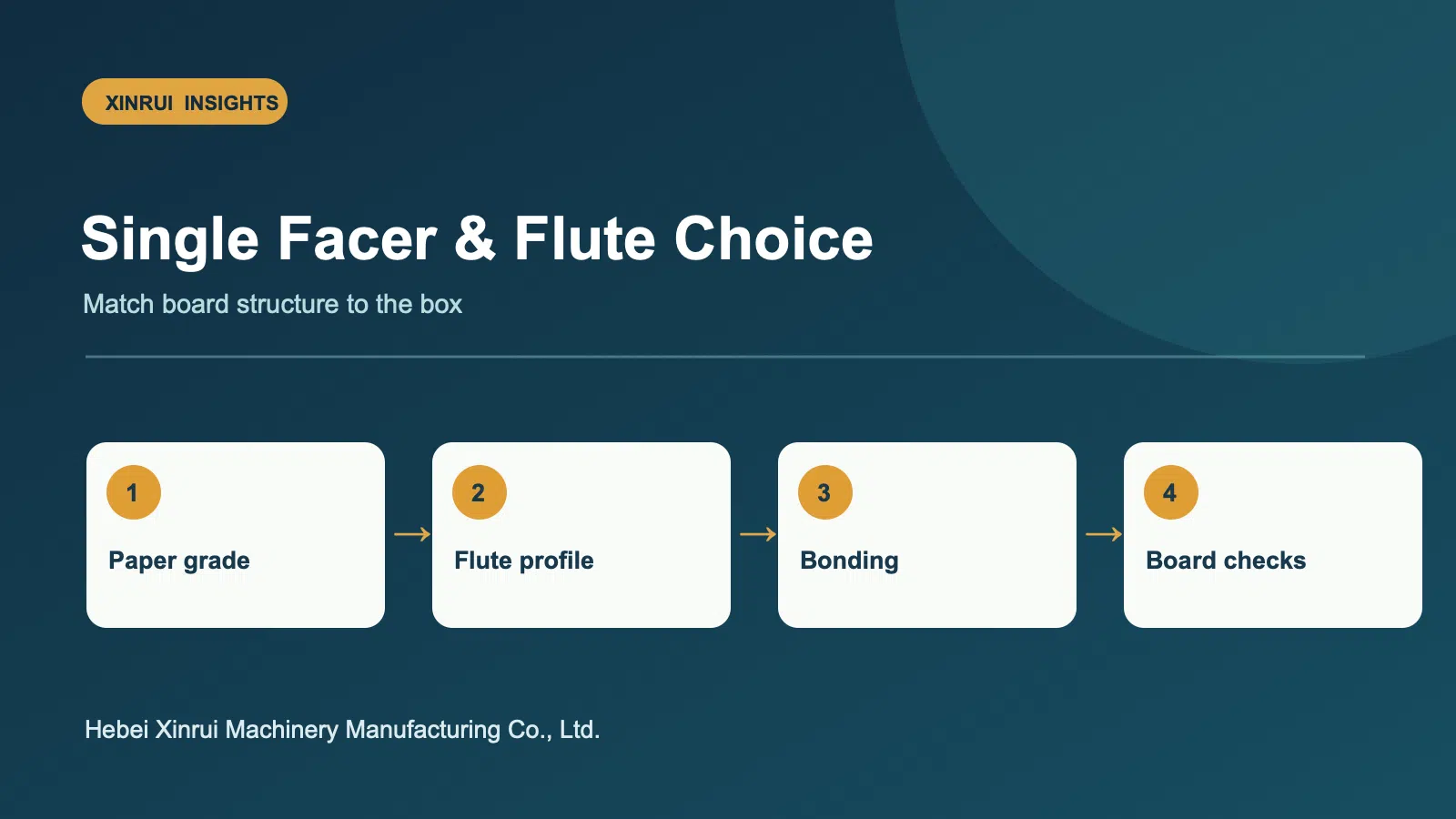
The single facer creates the fluted layer that gives corrugated board much of its structure. Choosing the machine begins with the boxes you plan to make, rather than with speed alone. A board recipe should name the liner and medium grades, flute profile and intended converting process.
Start with the required board
B, C and E flute profiles serve different packaging requirements. The correct choice depends on the box design, printing needs, strength targets and material combination. If several profiles are needed, list each one and the expected order share. A supplier can then discuss flute-roll changeover and the practical setup required for your mix.
Look beyond the rated speed
Working width and design speed describe a machine envelope, not a promise of finished cartons per hour. Paper quality, moisture control, heat, adhesive preparation and operator changeovers affect usable production. The XR-SF-1800 single facer is listed with 1800 mm working width, 180 m/min design speed, B/C/E flute options and steam heating. Confirm the selected flute equipment and utility requirements for your exact order.
Ask how bonding will be checked
Agree on the checks that matter for your board: flute shape, liner adhesion, warp, moisture and visible defects. Describe the samples or acceptance criteria you use today. That gives the equipment discussion a clear outcome and helps connect the single facer specification to the full corrugated board line.
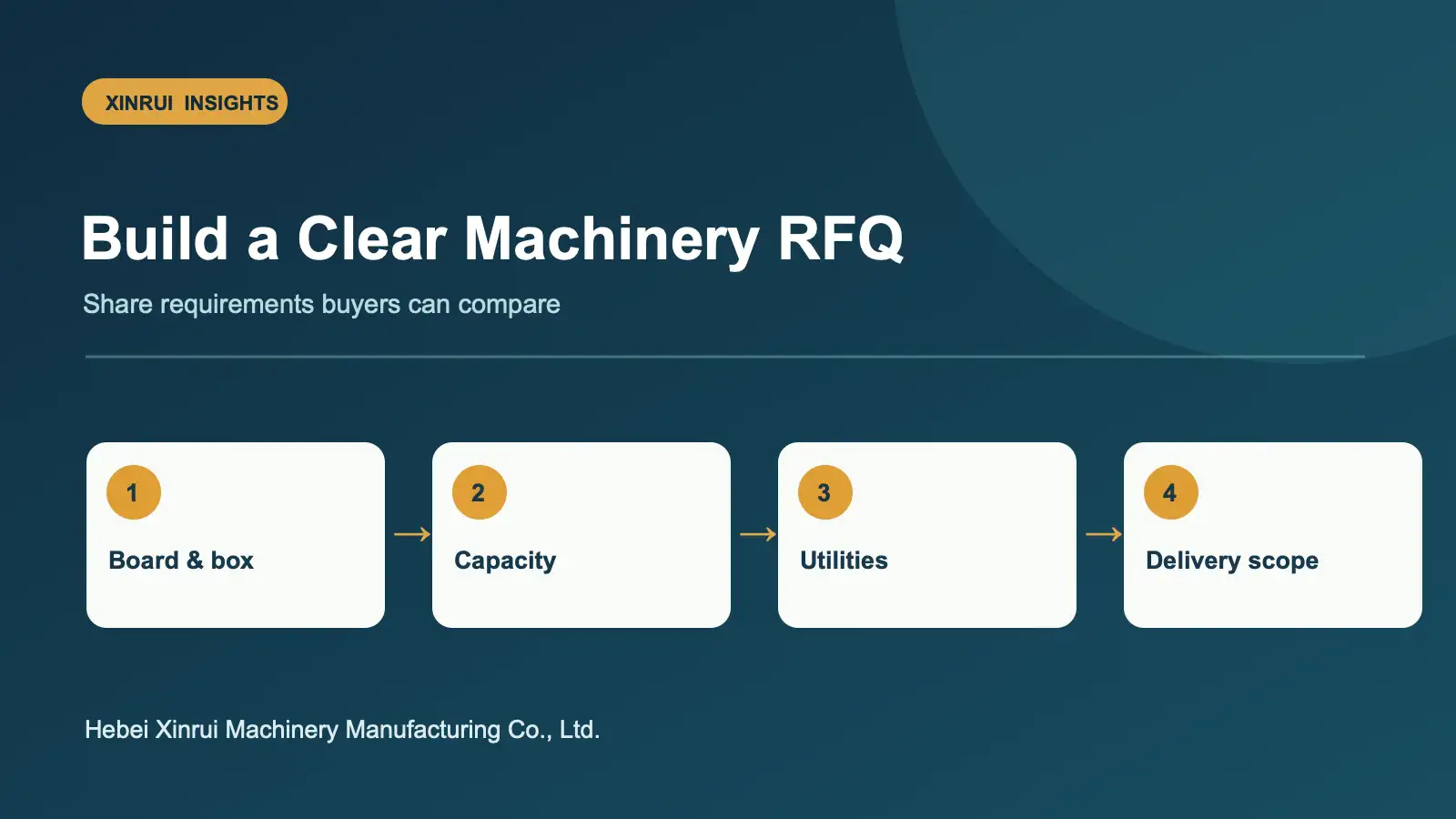
RFQ notes: Include paper grades, flute types, board width range, expected operating shifts, steam conditions and available space. Send them to [email protected].
Category: Corrugated Board Production
Topics: Single Facer · Flute Selection · Quality Control